Vostro Account: Meaning, Features & How It Works

TL;DR - Summary
- What is a vostro account? - A vostro account is an account a domestic bank holds on behalf of a foreign bank, usually in the domestic currency. It allows the foreign bank to access the local banking system for payments, settlements and other transactions without maintaining its own local banking infrastructure.
- What are the key features of a vostro account? - Vostro accounts are held in the local currency, enable local payment and settlement through the domestic bank, and form part of correspondent banking relationships between banks in different countries. They can also support eligible international trade settlements, such as INR settlements through Special Rupee Vostro Accounts (SRVAs).
- What is the difference between vostro, nostro and loro accounts? - A vostro account is "your account with us," while a nostro account is "our account with you," the same correspondent-banking relationship viewed from opposite sides. A loro account refers to the same type of account from a third bank's perspective.
What Is a Vostro Account?
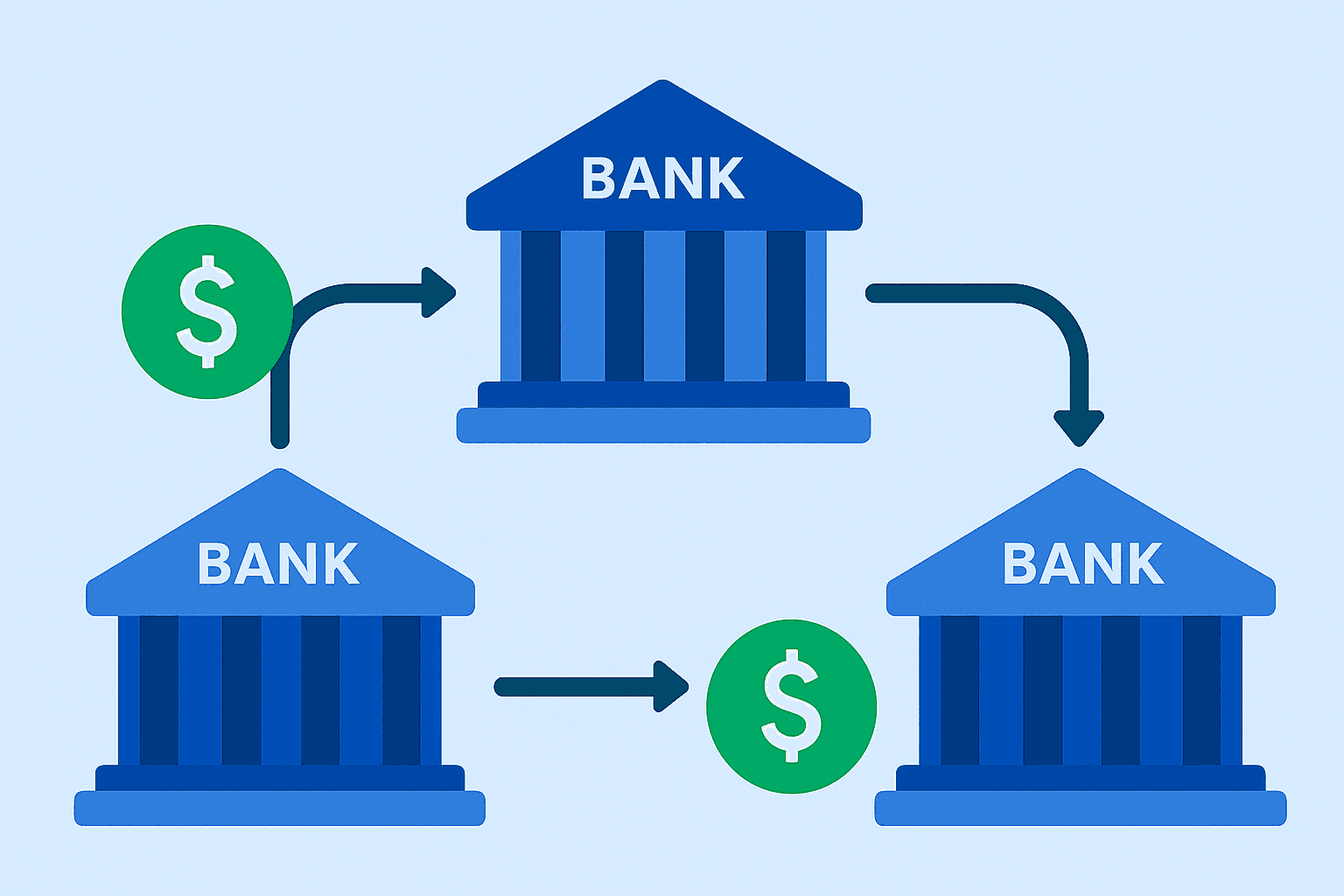
A vostro account is an account that a domestic bank holds on behalf of a foreign bank, usually in the domestic currency. Banks use vostro accounts to facilitate local transactions, settle trade payments, and process remittances on behalf of the foreign bank. It is a core piece of correspondent banking, where banks in different countries use one another's infrastructure to move and settle funds.
For example, if JPMorgan Chase in the US opens an account with SBI and holds Indian rupees in it, SBI considers that a vostro account. It lets JPMorgan Chase access India's banking system without maintaining its own physical branch in the country.
A vostro account may sound similar to a nostro account or a loro account, but the difference comes down to which bank is describing the same balance:
- Vostro account: The account as described by the bank holding another bank's funds. SBI calls the balance it holds for JPMorgan Chase a vostro account.
- Nostro account: The same account as described by the bank that owns the funds. JPMorgan Chase calls that balance its nostro account.
- Loro account: The same account as described by a third bank that is not a party to it. A bank in Singapore referring to the account SBI holds for JPMorgan Chase calls it a loro account.
People often assume they need to open a vostro account to receive money from abroad. You do not. Vostro accounts are held between banks, not by an individual. As the recipient, the payment simply lands in your regular bank account, or through the payment service handling the transaction.

What Are the Features of a Vostro Account?
The key features of a vostro account are local currency denomination, liability accounting on the host bank's books, its role as the backbone of correspondent banking, bilateral trade settlement in local currencies, inward remittance facilitation, and regulatory compliance with the host country's rules. Each one is explained below.
- Local currency denomination: The account is maintained in the home currency of the domestic host bank rather than in a foreign currency.
- Liability accounting: The host bank records the balance as a liability, because the money belongs to the foreign respondent bank and is owed back to it.
- Correspondent banking backbone: It is the primary tool of correspondent banking, letting a foreign financial institution offer services in a country where it has no physical branch.
- Bilateral trade settlement: It allows importers and exporters to settle cross-border trade directly in local currencies instead of routing everything through an intermediary currency such as the US dollar.
- Inward remittance facilitation: It streamlines local settlements, collections, and inward transfers for the foreign bank's customers.
- Regulatory compliance: Operations on the account stay governed by the host country's central bank and its domestic financial regulations.
Taken together, these features are what let a foreign bank hold funds locally, pay out in the host country's currency, and stay inside that country's regulatory perimeter without setting up its own presence there.

Vostro vs Nostro vs Loro: Key Differences
Nostro, vostro and loro are terms used to describe correspondent-banking account relationships from different perspectives. “Nostro” means “ours,” referring to a bank's money held with another bank. “Vostro” means “yours,” referring to that same balance from the perspective of the bank holding the money. “Loro” means “theirs,” referring to the account from the perspective of a third bank.
- Nostro ("ours"): A bank calls an account its nostro when it holds its own funds with a correspondent bank, typically in a foreign currency. For example, if SBI holds a USD balance with JPMorgan Chase in New York, SBI treats that balance as a nostro account. The balance is generally recorded as an asset on SBI's books because it represents cash SBI holds at another bank.
- Vostro ("yours"): The correspondent bank views the same balance as a vostro account because it is holding another bank's money. In the same example, JPMorgan's books would show the balance it holds for SBI as a liability to SBI.
- Loro ("theirs"): A third bank uses the term loro to refer to an account held by one bank with another bank. For example, if Bank A holds an account with Bank B, Bank C may refer to that account as a loro account because it belongs to “them,” rather than to Bank C.
They are not two or three separate pots of money. The nostro, vostro and loro labels describe the same underlying correspondent-banking account relationship from different perspectives.
| Feature | Nostro Account | Vostro Account | Loro Account |
|---|---|---|---|
| Meaning | “Our account with you” | “Your account with us” | “Their account with them” |
| Perspective | The bank that owns the funds | The bank holding the other bank's funds | A third bank referring to an account held between two other banks |
| Typical use | Holding funds with a foreign correspondent to make and receive payments in that market | Holding and managing another bank's funds and processing payments on its behalf | Referring to another bank's account held with a correspondent bank |
| Currency | Often a foreign currency for the bank that owns the account | Often the local currency of the bank holding the account, depending on the arrangement | Depends on the underlying correspondent account and currency arrangement |
| Balance-sheet treatment | Asset for the bank that owns the balance | Liability for the bank holding the balance | Not a separate balance-sheet account; the term reflects a third bank's perspective |
| Indian example | SBI holds USD with JPMorgan Chase in New York | JPMorgan's corresponding view of funds held for SBI | A third bank refers to SBI's account with JPMorgan as a loro account |
| Regulatory framework | Depends on the banks and jurisdictions involved | Depends on the banks and jurisdictions involved; Indian arrangements are subject to applicable RBI/FEMA rules | Depends on the underlying correspondent-banking arrangement and jurisdictions involved |
In India, RBI also permits Special Rupee Vostro Accounts (SRVA) for eligible international trade settlement. Under this mechanism, Indian exporters can receive export proceeds in INR from balances held in the designated vostro account, subject to the applicable RBI conditions.
How Does a Vostro Account Work?
A vostro account gives a foreign bank access to the domestic banking system by holding its funds with a bank in another country. In an INR vostro arrangement, the funds are held in Indian rupees, and the Indian bank can process payments from that balance on the foreign bank's instructions.
For an INR payment, the process can work like this:
How an INR payment settles through a vostro account
A foreign bank keeps rupee funds in a vostro account with an Indian bank.
A foreign bank keeps rupee funds in a vostro account with an Indian bank. This is what makes rupee settlement possible.
The Indian exporter bills the foreign buyer in rupees.
The Indian exporter invoices the foreign buyer in rupees for the goods or services provided.
The buyer instructs its own bank, as with any local payment.
The foreign buyer instructs its own bank to make the payment, as with any local payment.
The foreign bank directs the Indian bank to pay from its vostro balance.
The foreign bank directs the Indian bank to pay the exporter from its vostro INR balance.
The Indian bank credits the exporter. No border crossing.
The Indian bank credits the exporter. Settlement stays within India's banking system, so the INR never crosses a border.
The Indian bank acts as the local banking partner, processing payments and handling settlements on behalf of the foreign bank. Keeping funds in local currency can also reduce the need for currency conversion each time a payment is made. More broadly, vostro accounts support correspondent banking by allowing banks to provide services in countries where they do not maintain their own branches. Note that this is entirely different from the concept of virtual accounts vs local banks.
Example of Vostro Account
Consider Alpha Tech Solutions Pvt Ltd, a Bengaluru-based IT consulting firm that has completed a software project for Texas Retail Corp, its US client. Alpha Tech raises a USD invoice and uses Skydo to collect the payment. Behind the scenes, Skydo's payment infrastructure uses Vostro relationships with banking partners to receive the payment locally and settle it in India. Here:
- Skydo provides a virtual USD account. Alpha Tech receives US bank account details that it can share with its client. Skydo's current offering supports local US payment methods such as ACH and Fedwire, allowing the client to pay without sending a traditional international wire to India.
- The US client pays locally. Texas Retail Corp sends the USD payment from its US bank to the account details provided by Alpha Tech. From the client's perspective, this is a domestic US transfer using ACH or Fedwire.
- Skydo's Vostro-backed banking infrastructure processes the payment. The funds are received through the US banking infrastructure supporting Alpha Tech's virtual account. Skydo’s Vostro relationships with global banking partners allow it to receive international payments in local currencies and then settle them to Indian accounts.
- The payment is settled in India. Skydo converts the received USD at its applicable live FX rate and settles the equivalent INR amount into Alpha Tech's existing Indian bank account. Settlement to the Indian account takes within 24 hours, while FIRA is generated automatically for free, instantly, for the payment.
Why Do Vostro Accounts Matter For Indian Exporters And Freelancers?
Vostro accounts provide the banking infrastructure that allows foreign banks to hold funds and make payments through Indian banks. Indian exporters and freelancers generally do not manage these accounts themselves, but they can benefit from the payment routes these arrangements make possible. With Vostro accounts, you get:
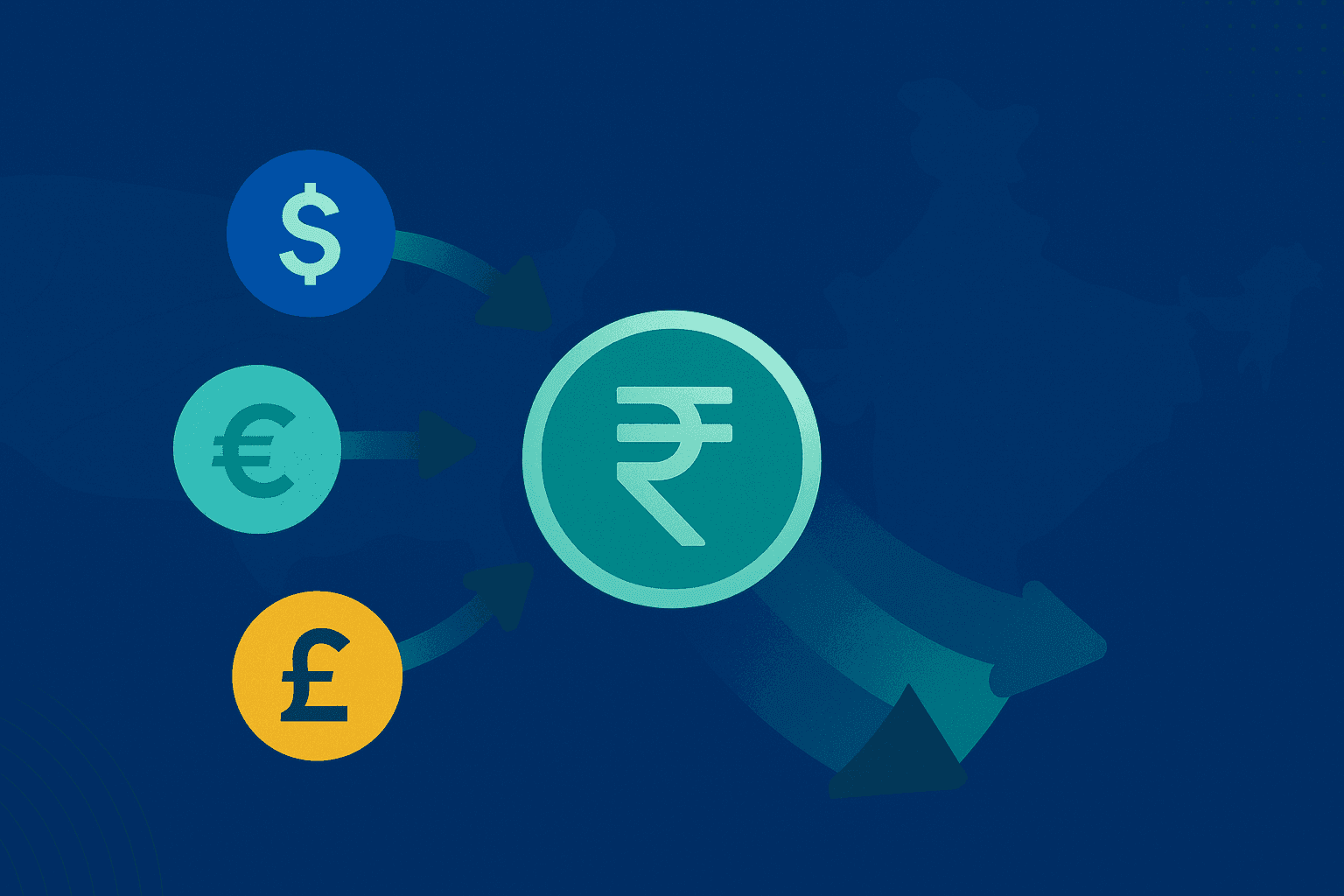
- Direct INR Settlement: Under RBI-permitted arrangements, a foreign bank can maintain INR funds in a Special Rupee Vostro Account with an Indian bank and use those funds to settle eligible trade payments to Indian businesses. This can reduce the need for repeated currency conversion while receiving money from abroad in India.
- Fewer Currency Conversions: When a foreign bank already holds INR through its vostro account, the Indian bank can make the corresponding payment from that local-currency balance. This can reduce the number of conversions involved in an INR-based settlement, although the actual cost depends on the payment arrangement.
- Access to Local Banking Infrastructure: A vostro account allows a foreign bank to use an Indian correspondent bank's infrastructure for eligible payments and settlements, without maintaining its own physical branch in India.
- Payment Documentation: The Indian bank processes and records the relevant transactions, creating the banking trail needed for applicable remittance and export documentation. The vostro account itself does not automatically generate FIRC, eBRC, or other compliance documents.
- No Direct Management for Exporters: Indian exporters and freelancers do not open or manage the underlying vostro account. These accounts are maintained between banks, while the recipient generally deals with their own Indian bank or payment provider.
- Support for INR-Based Trade: RBI permits international trade settlement in INR through Special Rupee Vostro Accounts (SRVA), subject to applicable conditions. For eligible transactions, this gives foreign buyers another route for settling trade with Indian exporters without relying exclusively on currencies such as USD or EUR.
💡 QUICK INSIGHT
The US client does not need to send a traditional international wire to India. It can make a local US payment, while Skydo's Vostro-backed infrastructure handles the cross-border settlement and INR payout. The advantages and limitations of virtual USD accounts for this type of payment setup are worth considering.
What Is a Special Rupee Vostro Account (SRVA)?
A Special Rupee Vostro Account (SRVA) is a rupee-denominated account that an Indian Authorised Dealer (AD) bank maintains for an overseas bank to facilitate eligible cross-border transactions in Indian rupees. It allows trade partners to invoice, pay, and settle eligible exports and imports in INR instead of relying entirely on a freely convertible currency such as the US dollar or euro.
RBI introduced the SRVA mechanism through A.P. (DIR Series) Circular No. 10 dated July 11, 2022, allowing Indian AD banks to open Special Rupee Vostro Accounts for correspondent banks of partner trading countries. The arrangement was introduced as an additional option for international trade settlement in INR, alongside existing settlement methods.
RBI issued A.P. (DIR Series) Circular No. 19, consolidating instructions from 5 earlier circulars issued between July 2022 and October 2025. The revised framework allows AD banks in India to open SRVAs for their overseas branches as well as banks resident outside India. It also permits SRVAs to be used for other permissible current and capital account transactions under FEMA.
The mechanism has three basic steps:
- Invoicing: Eligible exports and imports can be denominated and invoiced in INR.
- Payment and Settlement: For imports, the Indian importer pays INR into the designated SRVA of the overseas correspondent bank. For exports, the Indian exporter receives the INR proceeds from the balance held in that SRVA.
- Exchange Rate: The exchange rate between INR and the trading partner's currency is market determined.
The network has expanded significantly. Reports in early 2026 put the SRVA network at more than 80 accounts across more than 30 trading-partner countries. The current FEDAI directory confirms that the network spans countries including Russia, Germany, Bangladesh, Sri Lanka, Singapore, the UAE, the UK, Australia, New Zealand, Armenia, Belarus, Tanzania and others.
Russia remains a prominent example. The current FEDAI directory lists SRVA arrangements with Russian banks across multiple Indian AD banks, including Canara Bank, ICICI Bank, HDFC Bank, Kotak Mahindra Bank, Bank of Baroda, UCO Bank, Axis Bank and others. India and Russia have continued exploring INR-based settlement to reduce dependence on the US dollar, although actual payment routes can vary by transaction and regulatory conditions.
Indian banks maintain SRVAs for overseas correspondent banks. For example, Punjab National Bank's International Service Branch in New Delhi currently lists 10 SRVAs, covering banks from Myanmar and Bangladesh. FEDAI also maintains the broader country-wise SRVA Directory, which is the best place to check the current list of Indian AD banks and their overseas banking counterparts.
How Skydo Helps Indian Businesses Receive Money Using Vostro Accounts?
Skydo uses global banking infrastructure, including Vostro relationships with banking partners, to handle the banking layer behind international payments. For Indian freelancers and exporters, that means they can receive payments through local-style international accounts while Skydo handles the cross-border settlement, INR credit, and remittance documentation.
Skydo provides free virtual accounts in USD, EUR, GBP, SGD, AUD, CAD and other supported currencies. Account setup takes about 5 minutes, and overseas clients can pay through local methods such as ACH, Fedwire, or SEPA where available. Additionally, Skydo charges:
- $19 for payments up to $2,000
- $29 for payments from $2,001 to $10,000
- 0.3% above $10,000
What does a vostro account mean?
A vostro account is an account that a bank holds on behalf of a foreign bank, typically in the local currency of the bank holding the account. “Vostro” comes from the Latin word for “yours,” meaning “your account with us.”
What is the difference between a nostro and vostro account?
What is the RBI vostro account (SRVA)?
What is a nostro account example?
Do Indian exporters or freelancers need to open a vostro account?
Which Indian banks maintain Special Rupee Vostro Accounts?
What is a FIRA and why does it matter for international payments?
How does an SRVA differ from a regular vostro account?