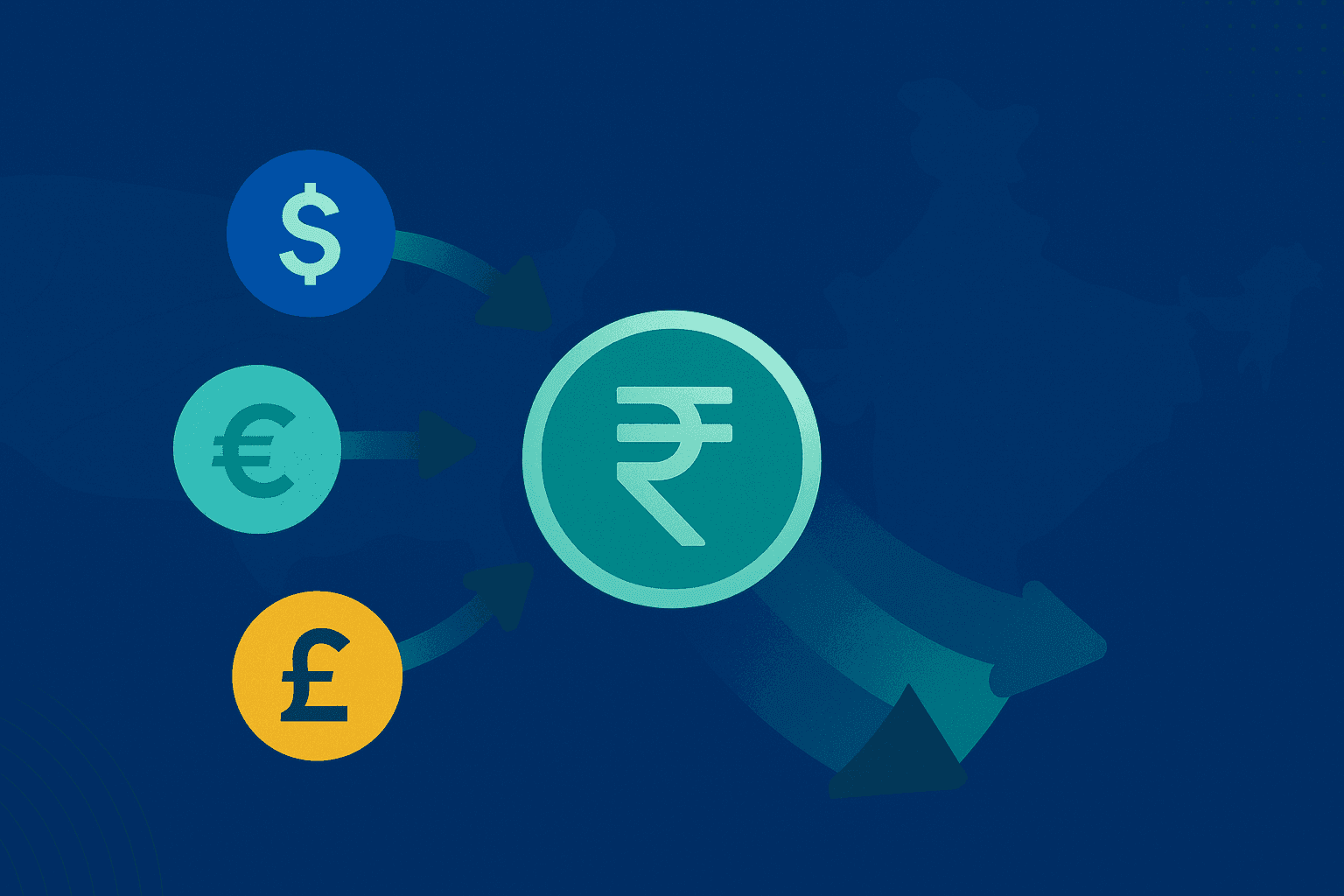
Instant Cross-Border Payments: How to Receive International Payments Faster

TL;DR - Summary
- What are instant cross-border payments? - Instant cross-border payments are international transfers built to complete in minutes or hours rather than the several business days a traditional bank transfer takes. "Instant" here means the unnecessary delays have been stripped out, not that the money lands the second it is sent.
- What are the features of instant cross-border payments? - Local receiving details in USD, GBP, or EUR, so the overseas client pays as if it were a domestic transfer. Fees disclosed upfront rather than deducted along the route. Real-time tracking, a predictable settlement timeline, and payment documentation such as a FIRA generated automatically instead of on request.
- How do instant cross-border payments work? - By shortening or removing the correspondent banking chain that slows a standard wire down. Instead of routing through intermediary banks, these payments run on domestic real-time rails, use local networks, draw on liquidity the provider already holds in the destination market, or land in a virtual foreign currency account that skips the wire altogether. The final leg into India still carries its own FX conversion and regulatory steps, which is why the receiving side is usually what sets the timeline.
What Are Instant Cross-Border Payments?
Instant cross-border payments are international transfers built to complete in minutes or hours instead of the several business days a traditional bank transfer usually takes. They have become more relevant as international trade, e-commerce, freelance work, and service exports have grown, mostly because getting paid faster means less time spent guessing when the money will actually show up.
The speed comes from cutting out, or at least shortening, the correspondent banking steps that slow a normal international transfer down. Instead of routing a wire through a chain of intermediary banks, these payments plug into domestic real-time payment rails, use local networks, hold pre-funded liquidity in the destination market, or give the recipient a virtual receiving account so the client can pay locally and skip the wire altogether.
For an Indian exporter or freelancer, that changes three things day to day. The client pays through what feels like a domestic transfer rather than an international wire, the fees are usually visible upfront instead of being deducted somewhere along the route, and the settlement timeline becomes predictable enough to plan cash flow around.
One caveat worth setting early: "instant" does not mean immediate. How quickly the money reaches an Indian account still depends on the payment method, the currency corridor, the compliance checks involved, and the process the receiving bank runs on its end. It is more useful to think of an instant cross-border payment as one with the unnecessary delays stripped out than as a promise the money lands the second it is sent.
How Do Instant Cross-Border Payments Actually Work?
Instant cross-border payments work by cutting out, or at least shortening, the correspondent banking steps that usually slow international transfers to a crawl.
The sender initiates the payment through a bank or payment platform, and the payment is converted into the required currency, if necessary. From there, it's routed by banks or payment networks, run through AML and KYC checks along the way, settled into the recipient's account, and finally confirmed to both parties.
A traditional wire can pass through correspondent banks at several of those stages. Instant systems avoid a lot of that by plugging into domestic real-time payment rails directly, using local networks, holding pre-funded liquidity, or offering a virtual receiving account that sidesteps the wire altogether.
The speed gap between these approaches isn't subtle:
| Payment method | Typical settlement speed |
|---|---|
| Standard SWIFT transfer | 2 to 5 business days |
| Expedited bank transfer | 24 to 48 hours |
| Real-time payment rails | Seconds to minutes |
| Virtual foreign currency account | Often within 1 business day |
Even so, the actual timeline depends on the corridor and who's handling it on both ends. A payment can leave the client's account almost instantly and still take longer to reach India once FX conversion, compliance checks, or receiving-side processing get factored in.
💡 QUICK INSIGHT
A payment can leave your client's account instantly but still take 2+ days to reach your Indian account due to FX conversion and RBI-regulated credit processes.
What Technology Powers Instant Cross-Border Payments
Five pieces do the work here: real-time payment rails, pre-funded liquidity, virtual currency accounts, APIs, and modern payment data standards, with compliance tooling sitting underneath all of them.
- Real-time payment rails. Domestic networks that let participating institutions move and settle funds in seconds rather than on a conventional clearing cycle. These are the fast road the payment travels once it is inside a country.
- Pre-funded liquidity. Some providers hold balances directly in the destination market. The recipient gets paid right away while the underlying balance between institutions settles separately in the background, which removes the time money would otherwise spend bouncing between correspondent banks.
- Virtual foreign currency accounts. Local receiving details in USD, GBP, or EUR that let an Indian exporter be paid the way a domestic supplier would be. The overseas client makes an ordinary local transfer instead of starting an international wire.
- APIs. The connective layer between providers and banks. A payment can be initiated, checked, routed, and tracked through software, without anyone manually pushing paperwork through the system.
- ISO 20022 and structured payment data. A data standard that lets richer, more structured information travel with the payment itself. Better data at the source means fewer errors and smoother compliance checks at the other end.
Running beneath all five are the compliance tools: automated sanctions screening, fraud detection, authentication, and transaction monitoring. These are what let a provider move quickly without dropping the checks that actually matter.
Traditional SWIFT vs. Instant Payment Platforms: What Is the Difference?
The core difference comes down to plumbing: SWIFT runs through international banking networks and correspondent banks, while instant platforms lean on local payment rails and digital infrastructure to cut the time in between.
SWIFT is still one of the most established ways to send money internationally, and its country and currency coverage is hard to beat. But a traditional wire can still get held up by intermediary banks, bank cut-off times, manual review, or extra charges tacked on along the route.
Instant payment platforms take a different path, using local infrastructure wherever it exists.
| Factor | SWIFT transfer | Instant payment platform |
|---|---|---|
| Speed | Usually 2 to 5 business days | Minutes to 1 business day, depending on corridor |
| Intermediaries | May involve correspondent banks | Often uses local payment networks |
| Fees | Intermediary deductions may apply | Often disclosed upfront |
| Tracking | Depends on the bank | Usually available digitally |
| Geographic coverage | Very broad | Depends on supported corridors |
| Client experience | International wire required | Local payment may be possible |
That doesn't make every fintech payment automatically instant, though. Speed still hinges on the specific currency, country, network, and process on the receiving side.
The real win with a payment platform is stitching several of these rails together behind one interface, so neither the exporter nor the overseas payer has to think about which route the money actually takes.
What Are the Barriers to Truly Instant Cross-Border Payments Today?
Six things keep cross-border payments from being genuinely instant, and most of them sit outside the payment rail itself.
- Compliance checks. Cross-border payments usually need AML, sanctions, and KYC review. A transaction flagged for extra scrutiny takes longer no matter how fast the underlying rail runs.
- Correspondent banks. A traditional wire can still pass through one or more intermediaries on its way. Each stop can add time and, sometimes, a fee deducted from the amount that eventually arrives.
- Currency conversion. Moving a payment from USD, GBP, or EUR into INR means pricing and processing an FX conversion as its own step, separate from the transfer itself.
- Legacy bank infrastructure. Many banks still run on systems built for old-style clearing cycles rather than round-the-clock settlement. If one link in the chain is slow, the whole payment feels slow.
- Interoperability gaps. Countries run different payment networks, message formats, and rules, and connecting them requires shared standards. ISO 20022 closes part of that gap, but not every institution has adopted it yet.
- The India leg specifically. The final stretch carries its own FX conversion and regulatory steps. A payment that moved instantly out of the sender's account can still take a while to become usable in an Indian bank account.
Most of these sit on the route the money travels rather than on the sending side, which is why the fix is usually to shorten the route. Receiving into a virtual USD or GBP account in your client's own country removes most of the cross-border leg entirely. Your client pays locally, and you receive the INR equivalent on a predictable timeline.
✅ PRO TIP
Receiving into a virtual USD or GBP account in your client's own country eliminates most of the cross-border delay, your client pays locally, and you receive the equivalent in INR with a predictable timeline.
How Should Indian Freelancers and Exporters Choose a Cross-Border Payment Solution?
The decision should rest on end-to-end settlement time, total cost, compliance documentation, currency support, tracking, and how easy the platform is to actually use.
A low headline transaction fee doesn't automatically make a provider the cheapest option once everything's added up. It's worth checking the full picture: FX markups, intermediary deductions, monthly charges, withdrawal fees, all of it.
Settlement speed matters in terms of when the funds actually become usable in India, not just how fast the client's payment left. Total cost needs comparing across transaction fees, exchange rates, intermediary charges, and any recurring costs, not just the number on the homepage. Documentation is worth checking too, specifically whether FIRA, FIRC, or similar remittance records get generated automatically instead of on request. Currency support has to line up with wherever overseas clients actually are. Real-time tracking makes cash-flow planning noticeably less of a guessing game. Client convenience counts as well, since a local payment option is usually easier for the overseas customer than an international wire. And goods exporters in particular carry extra reconciliation and eBRC requirements that service exporters simply don't deal with.
Example: a Bengaluru UX designer receiving £2,000
Take a Bengaluru-based UX designer billing a UK client £2,000.
Through a traditional SWIFT transfer, the client sends an international wire from a UK bank. That payment might pass through a couple of intermediary banks before it reaches India, and the designer could end up waiting several business days, then chasing the bank just to get proof of the payment.
Through a virtual GBP account, the designer instead hands the client UK account details. The client makes an ordinary local GBP transfer, and the provider handles the rest of the settlement into India from there.
The second route cuts correspondent banks out of the client's side of things, makes the fees visible upfront, and gives a settlement timeline that's actually predictable.
For a business handling this kind of payment regularly, that difference adds up quickly across dozens or hundreds of transactions.
Do not judge a cross-border payment solution by how fast the money leaves your client's account. For Indian exporters and freelancers, the measure that matters is how quickly it becomes usable in your Indian account. Compare the whole journey, settlement time, FX conversion, fees, compliance checks and documentation, before you pick a provider.

How Does Skydo Make Instant Cross-Border Payments Work for Indian Exporters?
Skydo speeds up international payments for Indian exporters and freelancers by giving them virtual foreign currency accounts, so overseas clients can pay locally instead of sending a traditional wire.
Skydo offers virtual receiving accounts in USD, EUR, GBP, SGD, AUD, and CAD. A UK client, for example, can pay into a Skydo GBP account through an ordinary local UK transfer rather than starting a SWIFT wire.
Pricing is shown upfront: $19 flat for payments up to $2,000, $29 flat between $2,000 and $10,000, and 0.3% above that. No monthly fees, and Skydo tracks every payment in real time.
Every transaction also comes with a free FIRA, the documentation exporters need for reconciliation and compliance.
Exporters who need eBRC closure can connect their DGFT account once, then bulk-upload shipping bills to map IRMs and generate eBRC directly through Skydo.
Setting up takes about 10 to 15 minutes, and support runs through WhatsApp, call, or text.
What that adds up to is a payment workflow built around what Indian exporters actually deal with day to day: local receiving details for clients abroad, upfront pricing, faster settlement, tracking, and documentation that shows up without being asked for.
Are cross-border payments ever truly instant, or is that just marketing language?
Some payment rails do settle in seconds or minutes, but end-to-end instant settlement into India isn't guaranteed. Currency conversion, compliance checks, and local processing can still tack on time.
How long does an international wire transfer actually take to reach an Indian bank account?
Do I need a FIRC for every international payment I receive, even small ones?
Is PayPal a good option for instant cross-border payments for Indian freelancers?
What is a virtual foreign currency account and how does it speed up payments for Indian exporters?
Will receiving payments through a virtual USD or GBP account create any tax or GST complications in India?
How many intermediary banks can a SWIFT payment pass through before reaching me?
What documents does an Indian exporter need to close EDPMS or generate eBRC after receiving a foreign payment?